.jpg?2025-12-19T08:02:17.947Z)
Scale up in Utrecht
Through close collaboration with UMC Utrecht, access to a strong local talent pool, and the advantage of a centrally connected location, Kuros has scaled from local research to global leadership in orthobiologics. Its pioneering technology helps people heal better and move more, contributing directly to a more active and resilient society.
Kuros is a prime example of how the Utrecht region’s health and life sciences ecosystem transforms innovation into real-world solutions – with reach far beyond the Netherlands.
Invented by Prof. Joost de Bruijn, PhD, the company’s Executive Director and President of Innovation, the MagnetOs technology is rooted in the Utrecht region’s academic landscape. Kuros operates as a science-driven powerhouse committed to advancing global bone healing through innovation.
© Kuros Biosciences
© Kuros Biosciences
Story of origin
From top science to tangible healing
Like most innovations in healthcare, the MagnetOs story originated in the lab. While investigating strategies for bone regeneration with bone substitutes, Prof. Joost de Bruijn, PhD and his team discovered that calcium phosphates with specific surface topographies could stimulate bone formation in muscle pouch studies in a dog model.*†1 The breakthrough came when bone tissue was unexpectedly discovered on a calcium phosphate scaffold that served as a negative control in an animal experiment, leading to a deeper investigation into the role of surface topography. *†1
That surface topography, further refined and now known as NeedleGrip™, became the foundation of MagnetOs.
Following promising results in muscle pouch studies in a dog model and a pivotal sheep posterolateral fusion (PLF) model showing superior fusion outcomes to other synthetics bone grafts, the technology gained attention.†1,3 Kuros acquired MagnetOs and began commercializing in the EU in 2017, reaching the US market a year later. Prof. de Bruijn led Kuros as CEO until late 2023, when Chris Fair assumed the role of driving the next phase of growth.
What sets MagnetOs apart is its NeedleGrip™ submicron surface technology. Additionally, MagnetOs contains no human cells or growth factors which alleviates concerns of disease transmission – making it a safe, proven alternative to autograft, even for oncology patients. 2,4-8
“Very candidly, when I first met Kuros and saw the MagnetOs product, I was concerned that this was going to end up being another one of those experiences where we get excited … and then the reality of outcomes deflates your enthusiasm, but the opposite has been true. We apply it to spinal fusion procedures, and we see really robust, solid fusion rates that we never saw with other products.”
says Dr. Alpesh A. Patel, Professor of Orthopedic and Neurosurgery at Northwestern and member of Kuros’ Strategic Advisory Board.
Extensive clinical portfolios
Evidence that moves the industry forward
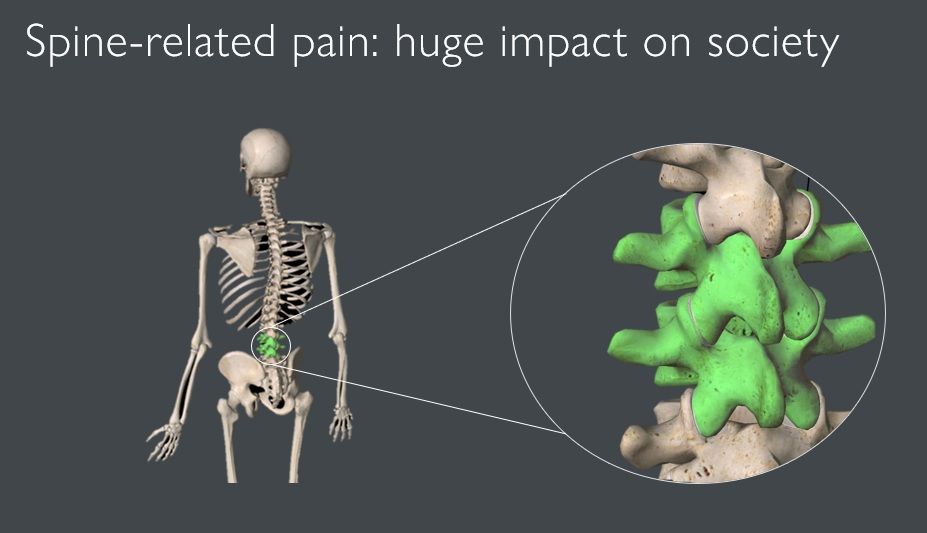
Unlike most bone grafts cleared with animal data alone, Kuros has built one of the most extensive clinical portfolios in the synthetic bone graft category, driven by its Project Fusion research program. At the core is the MAXA study, a ‘Level I’, randomized, controlled, multi-center clinical trial coordinated and sponsored by the UMC Utrecht with Prof. Moyo Kruyt as principal investigator and published in Spine. The study demonstrated that MagnetOs achieved nearly twice the fusion rate of autograft in PLFs (79% vs. 47%). In active smokers, often considered high-risk patients, this difference was even more dramatic: 74% vs. 30%. §19,¶
Ongoing collaborative studies in scoliosis, cleft palate, and foot & ankle procedures continue to expand the clinical footprint worldwide. One such example is the ACROSTIC study – a multicenter trial studying MagnetOs in cleft palate reconstruction led by UMC Utrecht with Dr. Nard Janssen as principal investigator. This growing clinical evidence strengthens MagnetOs’ global position and reinforces the Utrecht region’s role as a hub of medical innovation.
Collaborative ecosystem
Powered by the Utrecht Ecosystem
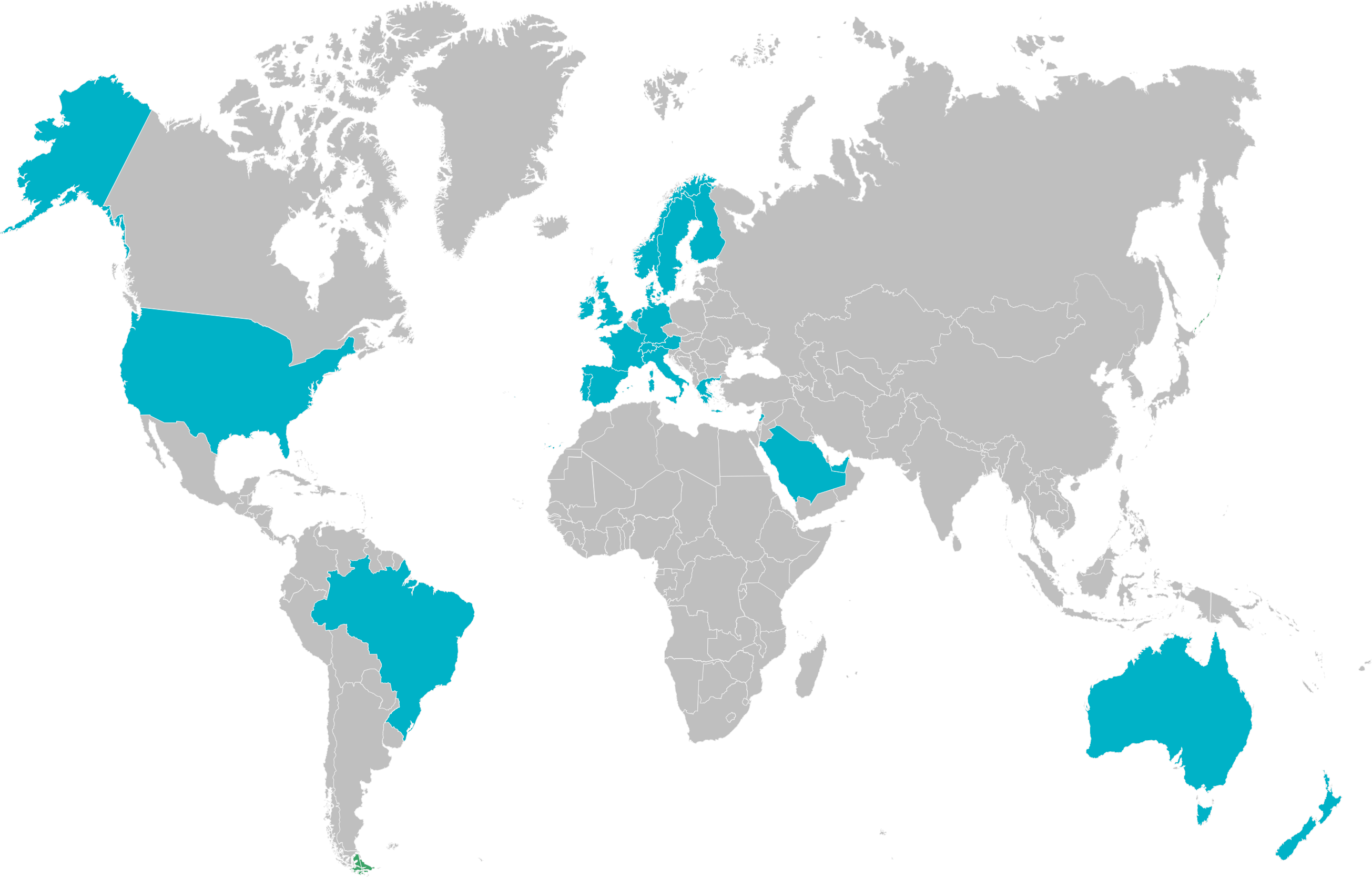
In 2024, Kuros doubled its revenue to $86.7 million, expanded its global reach from 11 to 23 countries, and significantly grew its team. By 2027, the company is projected to reach $220–250 million in revenue. Stock prices have reflected that momentum, more than doubling over the past 18 months. Kuros has also doubled its production capacity in Bilthoven to meet surging global demand, with further expansion already underway.
“This is a moment of scale and impact. From new product launches to commercial traction across markets, we’re delivering not just growth, but global confidence in a smarter approach to healing bone.”
says CEO Chris Fair.
This success is fueled not just by product innovation, but by the Utrecht region’s collaborative ecosystem. The region brings together academic excellence, global connectivity, and a deep culture of public-private partnerships. Bilthoven has proven to be an ideal launchpad for innovations like MagnetOs, with a strong foundation of clinical, technical, and operational support.
Leadership in health innovation
Advancing the Health of the World from Bilthoven
MagnetOs is more than a medical device, it’s a symbol of Utrecht’s leadership in health innovation. It brings new hope to high-risk populations including patients with comorbidities and is an effective alternative to some traditional bone grafts. 2,11,12 With every case, every study, and every patient helped, Kuros is turning bold science into better outcomes and helping build the healthier, more sustainable world envisioned by the Heart of Health initiative.
Kuros Biosciences
Kuros Biosciences is on a mission to discover, develop and deliver innovative biologic technologies. To deliver the ideal bone graft, you need the highest quality and quantity of scientific evidence behind it. We believe that this is a key differentiator for Kuros, given the urgent need to advance bone healing.
References and disclaimers:
MagnetOs Easypack Putty, MagnetOs Flex Matrix and MagnetOs MIS are available for use in the U.S. only.
*Results from in vitro or in vivo laboratory testing may not be predictive of clinical experience in humans. For important safety and intended use information please visit kurosbio.com.
†1 MagnetOs is not cleared by the FDA or TGA as an osteoinductive bone graft.
‡2 MagnetOs Flex Matrix is not indicated for use in the extremities or pelvis.
§19 of initial 100 patients were active smokers.
¶ Radiographic fusion data of the smoker subgroup were not statistically analyzed as a subgroup and were not included in the peer-reviewed publication of the study.2
1. Duan, et al. eCM. 2019;37:60-73
2. Stempels, et al. Spine. 2024;49(19):1323-1331.
3. van Dijk, et al. Clin Spine Surg. 2020;33(6):E276–E287.
4. Instructions for Use (IFU) MagnetOs Granules.
5. Instructions for Use (IFU) MagnetOs Putty.
6. Instructions for Use (IFU) MagnetOs Easypack Putty.
7. Instructions for Use (IFU) MagnetOs Flex Matrix.
8. Instructions for Use (IFU) MagnetOs MIS.
9. van Dijk, LA. 24th SGS Annual Meeting (SwissSociety of Spinal Surgery). Basel, Switzerland. Aug 2024.
10. Data on file. ACROSTIC study.
11. Davis, J. et al. Orthopedic Reviews. 2025.
12. Wakelin, et al. World Neurosurgery. 2025.